
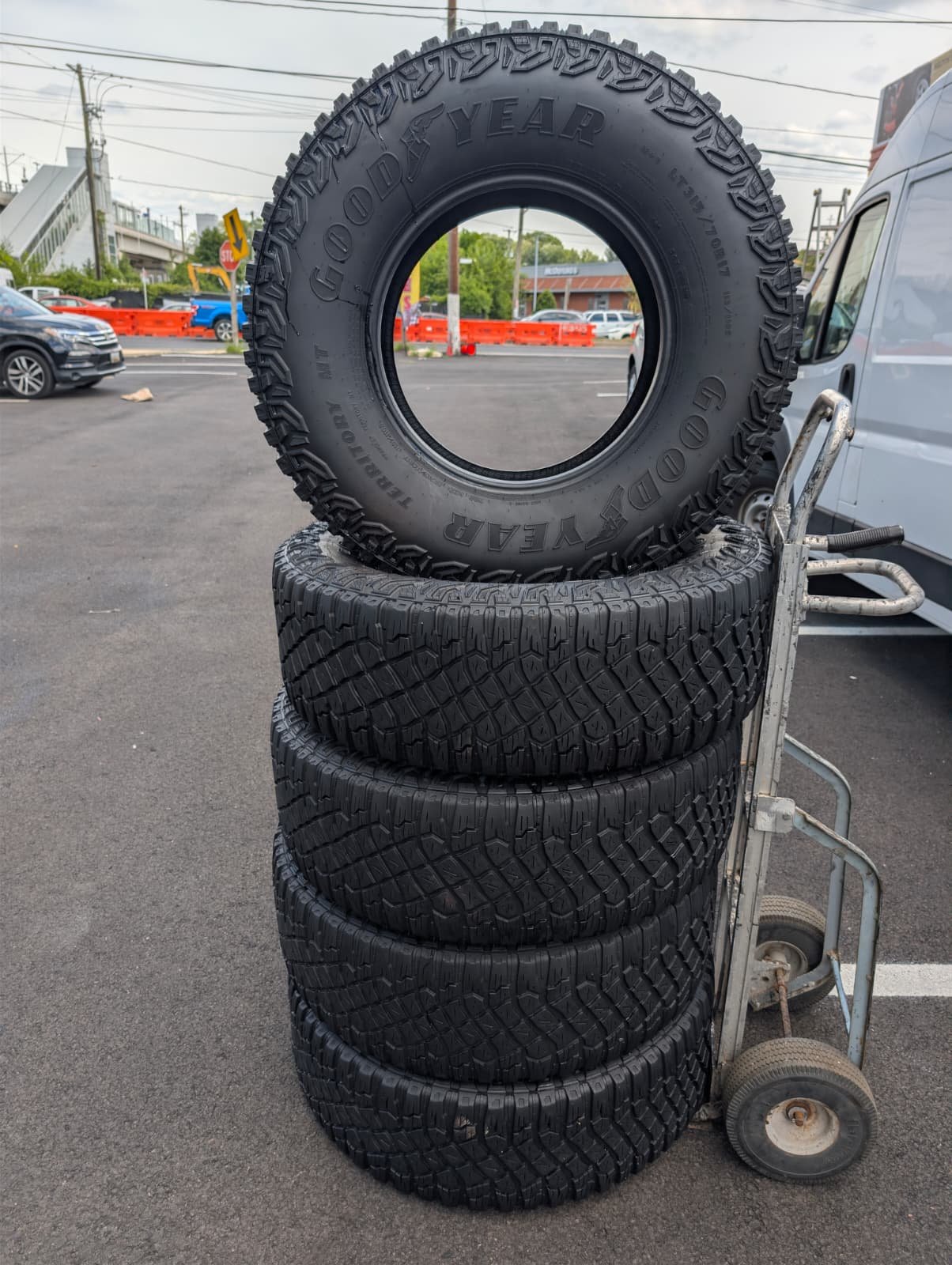
how long do tires last Maryland

How Long Do Tires Last in Maryland? Honest Answers for Local Drivers

The official answer is 25,000 to 50,000 miles, or six years, whichever comes first. The real answer is: it depends, and Maryland makes it harder on tires than most other states. Between the road salt in winter, the pothole season in spring, the summer heat, and stop-and-go traffic in Prince George's County, tires around here take a genuine beating. So let's talk about what actually shortens tire life and what you can do to get the most out of every set.

The Official Lifespan vs. What Actually Happens

Most major tire manufacturers recommend replacing tires after six years regardless of tread depth, and replacing them no later than 10 years from the manufacture date even if they look fine. The reason is rubber. Over time, the rubber compound dries out and develops micro-cracks, a process called oxidation that weakens the tire's structure even when there's plenty of tread left on the surface.In practice, most drivers around Riverdale Park and Hyattsville get somewhere between 30,000 and 50,000 miles out of a standard all-season tire before the tread wears to replacement depth. High-performance or summer tires wear faster, sometimes 20,000 to 25,000 miles. Budget tires on the lower end of the market often wear faster too, which is something worth factoring into the comparison between a $60 tire and a $120 one.

Why Maryland Is Harder on Tires Than Most States


  • Road salt:

     Maryland applies road salt heavily during winter ice events. Salt accelerates rubber oxidation and also corrodes wheel rims, which can affect how well the tire seats, leading to slow leaks.


  • Potholes: Prince George’s County roads are rough in spring. Every significant pothole impact puts stress on the tire bead and sidewall, and can throw off wheel alignment, which causes uneven wear that shortens tire life.

  • Temperature swings: Maryland winters drop into the teens and summers push into the mid-90s. Tire pressure changes roughly 1 PSI for every 10-degree temperature shift. Underinflated tires wear faster on the edges; overinflated tires wear faster in the center.

  • Stop-and-go traffic: The Kenilworth Ave corridor, Route 1, and US-50 all involve a lot of braking and acceleration. Front tires on front-wheel-drive vehicles wear significantly faster in heavy traffic conditions.

Signs Your Tires Need Replacing Now

    • Tread depth is at or below 2/32 of an inch — stick a penny into the groove with Lincoln’s head down. If you can see his full head, your tread is gone.
    • Cracks or bulges on the sidewall — these don’t fix themselves and can lead to blowouts.
    • Your tires are 6+ years old — rubber degrades over time even if tread looks okay.
    •  
    • Uneven wear across the tire surface — this usually points to an alignment or balancing issue.
    • Vibration or pulling while driving — can indicate a bad tire or one that needs balancing.

If any of those describe your tires, it’s worth stopping by for a quick look. We can tell you in minutes whether your tires are still safe or need attention.

How to Make Your Tires Last Longer

The good news is that tire lifespan isn't fixed, how you maintain your car has a direct impact on how long each set lasts. A few habits make a real difference.

Check tire pressure monthly:  Especially important in Maryland due to temperature swings. Correct pressure is on the sticker inside your driver's door jamb — not the number on the tire sidewall.

Rotate every 5,000 to 7,500 miles:  This evens out wear between front and rear tires. On a front-wheel-drive car, front tires wear faster — rotation extends the usable life of the full set.

Get alignment checked annually:  Or any time after hitting a significant pothole. Misalignment causes uneven wear that can cut tire life in half.

Don't ignore slow leaks:  A tire that runs even slightly underinflated wears faster on the edges and is more vulnerable to sidewall damage from impacts.

New vs. Used Tires — When Does Each Make Sense?

If your vehicle is newer, you drive significant highway miles, or you want the full manufacturer warranty, new tires are the right call. But if your car is older, if you only need a single replacement after a blowout, or if the budget is genuinely tight, a quality used tire from a shop that inspects them properly is a completely reasonable option.

At Miltos Tires and Auto in Riverdale Park, we sell both. Every used tire we offer has been checked for tread depth, sidewall condition, and structural integrity. We don't sell tires we wouldn't put on our own vehicles.

Not Sure About Your Tires? Come In for a Free Look.

New and used tires, same-day installation, no appointment needed. 📞 240-610-1749 | 📍 6104 Kenilworth Ave, Riverdale Park, MD | Walk-ins welcome

How Long Do Tires Last in Maryland? — Frequently Asked Questions

A: Look for a four-digit code on the sidewall starting with 'DOT'. The last four digits are the week and year — for example, '2423' means the 24th week of 2023. If the tires are six or more years from that date, it's worth having them inspected even with decent tread.

A: Not necessarily the same total lifespan, but a quality used tire with 6/32" or more of tread remaining still has meaningful miles left. At Miltos, we check tread depth on every used tire we sell so you know exactly what you're buying.

A: For most standard vehicles, yes — especially if the other three tires have similar tread depth. On all-wheel-drive vehicles, replacing a single tire can cause drivetrain issues, so check your owner's manual or call us first.

A: The most important times are in the fall when temperatures start dropping (every 10°F drop reduces pressure by about 1 PSI) and in spring when they rise. A quick monthly check takes 2 minutes and saves uneven wear.

A: Bring your vehicle to 6104 Kenilworth Ave, Riverdale Park, MD. We'll take a quick look at tread depth and sidewall condition at no charge and give you a straight answer about whether they're safe or need attention.

Leave A Comment