New Tires vs. Used Tires: Which One Is Right for You?
It's one of the most common questions we get at Miltos Tires and Auto — and honestly, there's no single right answer. The truth is that both new and used tires make sense depending on your situation. Not sure whether to buy new vs used tires Riverdale Park, MD breaks down the honest pros and cons so you can decide. What matters is making an informed choice rather than just defaulting to whichever option someone tells you to pick. So let's walk through the real pros and cons of each.
The Official Lifespan vs. What Actually Happens
New tires come with a few clear advantages that are worth paying for in the right situation. First, you get the full tread depth — typically 10/32" to 11/32" on a standard all-season tire, which gives you the maximum lifespan from day one. Second, new tires come with manufacturer warranties that cover defects and sometimes offer road hazard protection. Third, because you know the exact history (there isn't one), you don't have to guess whether the tire was previously run low on pressure or involved in an impact.New tires are the right call when your vehicle is newer and the other three tires still have good life left — because mismatched tread depths affect handling. They're also the better choice for all-wheel-drive vehicles, where significant tread depth differences between tires can strain the drivetrain. And if you drive a lot of highway miles or frequently drive in wet conditions, new tires give you the confidence of a full safety margin.
The Case for Used Tires
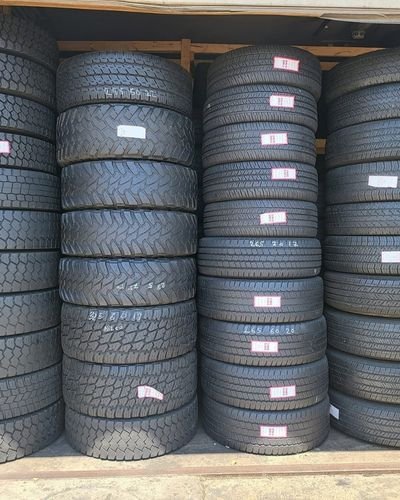
Used tires get a bad reputation they don't always deserve. A quality used tire — one that has been properly inspected and has 6/32" or more of tread remaining — still has a meaningful amount of safe life left. In practical terms, that might be another 20,000 to 30,000 miles of normal driving. For the right situation, that's genuinely excellent value.
Used tires make the most sense when you need a single replacement after a blowout and your other three tires are moderately worn — buying one new tire in that situation actually creates a mismatch. They also make sense for older vehicles that you're not planning to keep long-term, for drivers on a tight budget who need to get back on the road safely, and for temporary replacements while saving up for a full new set.
What to Watch Out for With Used Tires
Not all used tire sellers are equal, and that's where a lot of the bad reputation comes from. Here's what to look for when buying used tires — and what we check at Miltos before anything goes on our floor.
The Price Difference — Is It Worth It?
A standard new all-season tire for a typical sedan runs $80 to $150 per tire depending on brand and size. A quality used tire in the same size typically runs $30 to $60. For a full set of four, that's a potential savings of $200 to $360 — real money, especially when you're dealing with an unexpected tire expense.Whether that savings is worth it depends on what you're driving, how long you plan to keep the vehicle, and whether the used tires available match your needs in terms of tread depth and condition. The best approach is to look at what's available, ask about tread depth and age, and make the call based on actual numbers rather than assumptions.